PURPOSE The purpose of this study is to develop and verify the validity and reliability of the Korean version of the Korea Institute of Sports Science (KISS) golf conditioning questionnaire survey. METHODS A total of 320 professional and elite-amateur female golfers were recruited and parallel analysis and exploratory factor analysis were conducted to evaluate the suitability of the intended five-factor model (physical fitness, injury, nutrition, mental, and performance strategy). Confirmatory factor analysis was also used to determine the questions by evaluating goodness-of-fit indexes. RESULTS 5-factor model was supported by showing Bayesian information criterion −386.75, Tucker-Lewis index 0.947, root square error of approximation 0.049 and standardized root mean square residual 0.03. The final model of the Korean version KISS golf conditioning questionnaire survey showed a comparative fit index of 0.928, Tucker-Lowis index of 0.908, root mean square residual of 0.066, and standardized root mean square residual of 0.077, confirming the suitability of the model. CONCLUSIONS This study demonstrated the feasibility and reliability of the Korean version KISS conditioning questionnaire survey for Korean elite female golfers. The objective evaluation prior to plan and execute conditioning using this evaluation tool will allows elite female golfers to obtain essential information to optimize the concurrent conditioning.
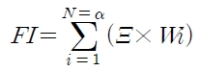
This study recounts what influences sports athlete reputation. As social media have become more widespread, athlete’s non-sport-related activities can be accessed almost instantly. This change in the media environment requires sports athletes not only to attend to their sporting ability, but also to systematically manage non-sport factors in order to maintain and improve their brand values and reputations. In order to collect factors constructing sports athlete reputation, a pre-study including an open-ended survey based on free association, analysis of media reports, and consultations from sports experts was conducted. The pre-study process resulted in a final number of 44 items for use in the study. In the main survey, 452 panelists were collected through an on-line survey. To verify the 44 items of sports athletes’ reputations Exploratory Factor Analysis (EFA) was conducted. As a result of EFA, 21 items were finally selected and grouped into six factors: a) game results; b) management of playing capability; c) personal character; d) external appeal; e) sportsmanship, and f) management of privacy. The results from this study also suggest that game results are the most important factor influencing sports athletes’ reputations. Management of playing capability and sportsmanship are considered more important than are personal character, external appeal, or privacy management. It is expected that the result of this study would help corporations to develop strategic analysis for sports athletes’ reputation.
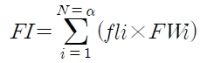
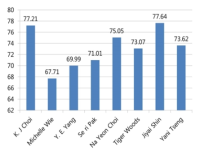
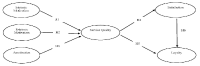
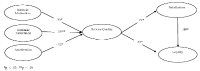
Competition among golf courses in South Korea for recruiting and retaining customers has increased dramatically over the years as the number of golf courses grew. Therefore, it has become important for golf course managers to understand what attracts golfers to their golf courses. The purpose of this study was to examine the relationships among motivation, service quality, customer satisfaction, and loyalty among recreational golfers in South Korea. Total 563 recreational golfers participated in this study and responded to a self-administered survey measuring the constructs. The result showed that intrinsic motivation and extrinsic motivation were positively associated with service quality whereas amotivation was negatively related to service quality. In addition, golfers’ perceived service quality had a positive impact on golfers’ satisfaction and loyalty towards golf courses. These results suggest that golf course managers should understand the types and levels of motivation golfers have and develop strategies for enhancing service quality.
This study assessed the relative contribution of technical variables affecting birdies (Bir) and official money (OM) among the top 10 players of the Ladies Professional Golf Association. The average difference in performance variables was assessed according to prize money, country and continent, and time. Multiple regression analysis and one-way ANOVA were conducted, and a p-level less than .05 was considered statistically significant. First, putting average (PA) made the largest relative contribution to Bir and OM, followed by green in regulation (GIR). Second, players with highest prize-money earnings had significantly better drive distance (DD), drive accuracy (DA), sand saves (SS), and PA than median/lowest prize-money earners. Moreover, GIR was found to be accurate in distinguishing players’ prize-money rankings. Third, Korean and Oceanian golfers had significantly better PA than American and European golfers; Korean golfers demonstrated better Bir, Par3, Par4, and Par5 than players from other countries and continents. Lastly, women golfers’ performance improved in a 10-year-cycle. Particularly, DD, DA, and GIR significantly improved over each cycle, and Bir, Par3, Par4, and Par5, but not Eag, also significantly improved.
The purpose of this study was to examine the effect of reactive neuromuscular training (RNT) on golf swing kinematic sequence. RNT aims to develop effective dynamic stability or movement, minimize the need for verbal and visual instruction, and self-respond to stimulus created by outside force (eg. elastic band). A golf swing is a highly complex motor skill that requires multi-segments coordinative movement, such as golf kinematic sequence. To apply RNT to amateur golfers who tend to sway their body or head, inertial overloading technique utilizing clubbell (5kg) swing applied outside force (perturbation). Twenty-Four male amateur golfers were divided into two groups (RNT vs. Control). A golf ball tracking system (FlightScope Kudu) and 3D motion analysis system (K-vest) were selected for measurement devices. The experiment task was a 7-iron golf full swing. The carry distance, maximum angular velocity (pelvis, thorax, and wrist), and deceleration timing (pelvis, thorax, and wrist) were selected for dependent variables. The RNT group outperformed in carry distance. The maximum angular velocity of the pelvis and wrist were significantly higher in the RNT group. The deceleration timing of the pelvis and thorax significantly moved forward toward mid-downswing in the RNT group. The results of this study confirmed the motor learning effect of RNT on golf kinematic sequence and distance performance.